
Goal:
Democratize molecular making for all ages, lowering the barriers to scientific education
Solution:
Develop digital interfaces and physical prototypes for chemists of all ages
Impact:
Creating the world’s first web-based molecule builder and inspiring new scientists
The Molecule Maker Lab Institute (MMLi) is an revolutionary five-part project.
Over 60 researchers are contributing through a $20 million National Science Foundation grant.
In its beginning, the Molecule Maker Lab was just a machine in a laboratory. It has since grown to amazing proportions! Below are the highlights from our research, UI / UX design, and educational technology.
Research
The chemistry revolution began with the invention of the “Small Molecule Synthesizer” (SMS).
This machine is the cornerstone of the Molecule Maker Lab (MML). Combine molecules with the click of a button!
We set out to figure out how we could make this as successful as possible.
Time to interview!
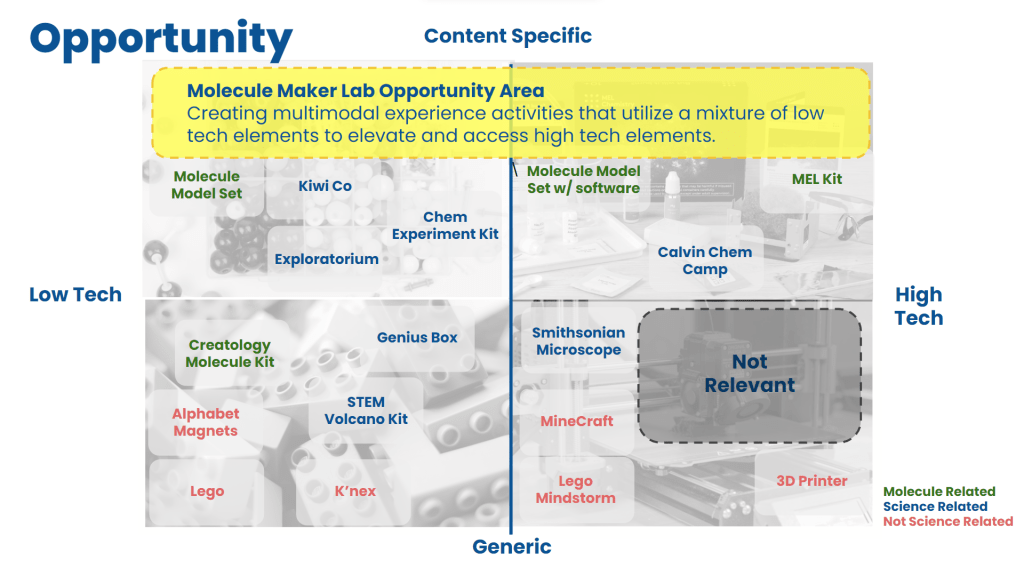
This matrix shows where we’re ideating
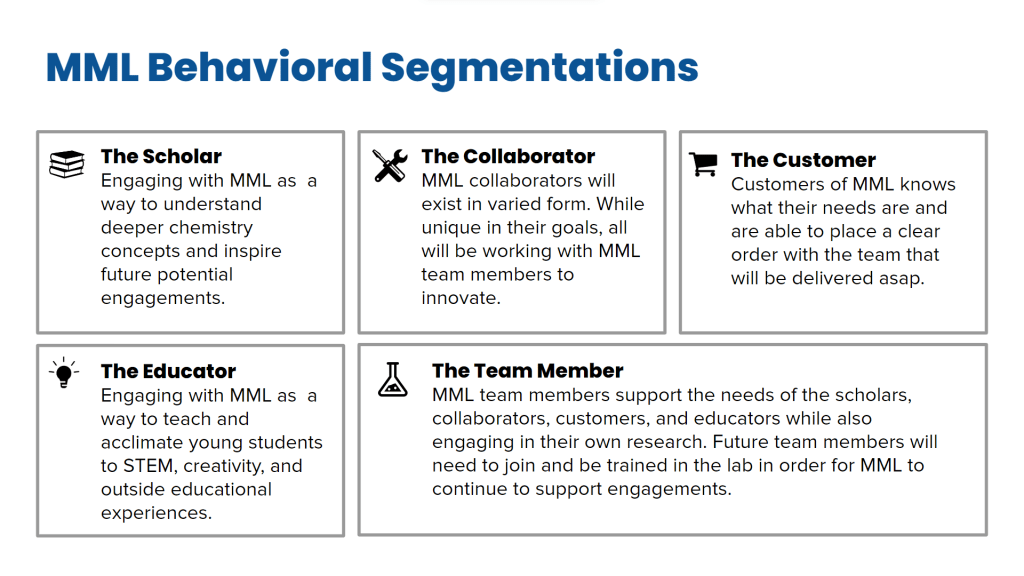
This gives more detail on our personas
We began our flurry of interviews with anyone and everyone who would talk with us. We asked questions like:
When explaining chemistry concepts, where do the most students struggle?
When you get stuck on a problem in the lab, how do you handle that?
What possibilities exist for these advanced technologies for misuse?
What technologies disappear when this comes to fruition?
Can you tell me a story of a time when you really enjoyed your time here in the lab?
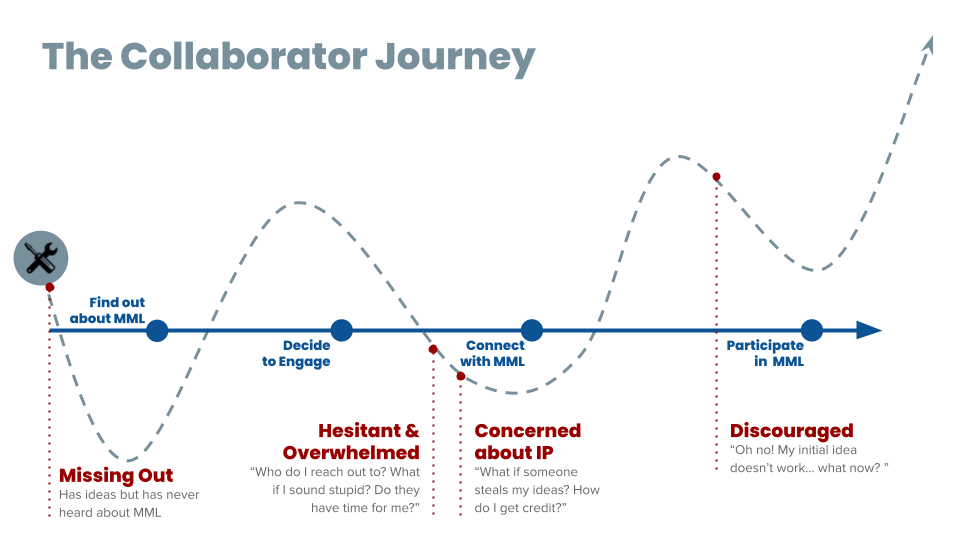
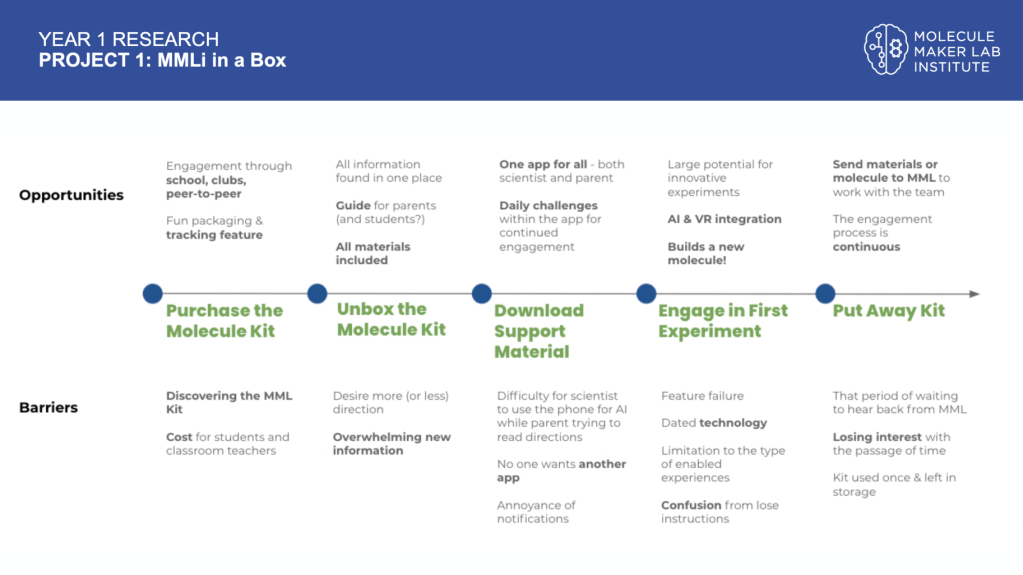
Through these interviews, we were able to map out the journeys
of all our PMM’s, or Potential Molecule Makers.
Our personas were: the Scholar, the Collaborator, The Customer, the Educator, and the Team Member.
We got inside our users’ heads by creating user journeys for each persona. This allowed us to better understand what they’re feeling at certain moments. This also shows us where our knowledge is lacking!
Below is just a taste of the research that we conducted!
“Many of the greatest challenges facing society today have molecular solutions that await discovery. We aim to shatter these barriers and thereby democratize molecular innovation by creating the world’s first Molecule Maker Lab.”
Dr. Martin Burke, Illinois Chemistry Professor
My team, Thrust V, is the most human-centered design focused.
Our job focuses on the look, functionality, and embodied learning applications for MMLi. For the look, we did a total web design (and many redesigns!).
For functionality, a digital interface called the Digital Molecule Maker (DMM). A hands-on physical product called “MMLi in a Box” was our embodied learning.
UI / UX: Digital Molecule Maker
The Digital Molecule Maker (DMM) makes molecule building simple. We prioritized clean and intuitive interactions in the user interface.
After a long year of research and interviews, we put out our first demo of the Digital Molecule Maker.

DMM iteration #1 focused on simplicity
After many user tests, we switched
our mindset.

A snapshot of our early interview numbers

Our second DMM iteration
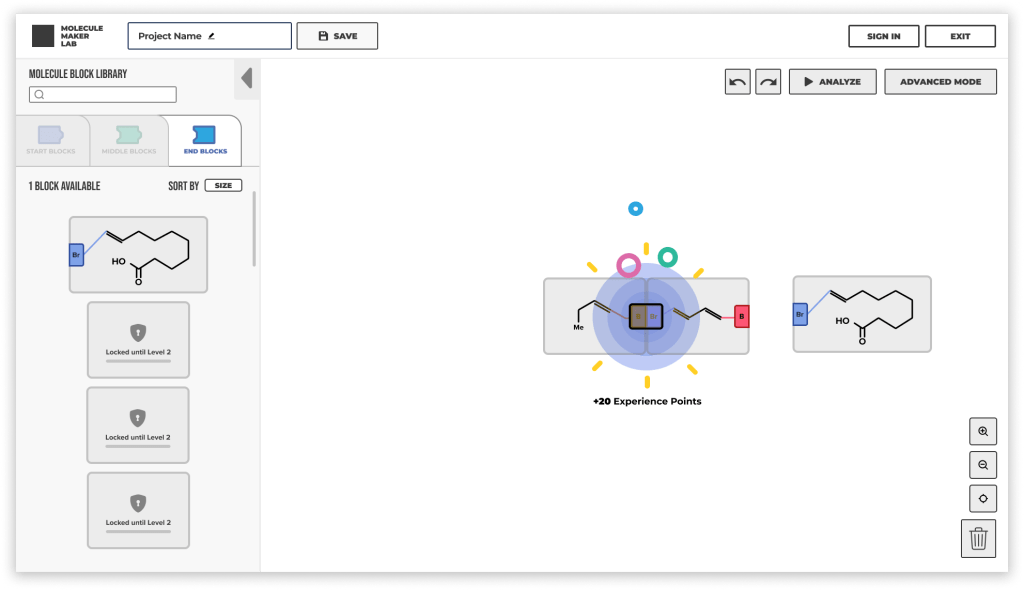
Iteration #3 focused on gamification
Instead of going back to the drawing board alone after a long day of feedback… we asked, “why don’t we bring the scientists back with us?”
We began weekly co-creation meetings with the engineers behind the SMS. Then we expanded the group we were interviewing to be even more diverse!
I facilitated this interdisciplinary group of 15 weekly. Scientists, engineers, marketers, teachers, students, and designers all coming together. We had all sorts of incredible brainstorming activities.
During co-creation they told us that our current version was way too simple!
Which lead to our next design… which was way too complicated.
We spent the next phase of our research playing with similar online tools like Scratch, LabStep, and ChemDraw to see what we were missing.
Balancing gamification and functionality for experts was our guiding vision.
We shifted designs to focus on rewarding different interactions. By encouraging users to explore, we could maximize learning.
Below are our interactive designs. Click to interact!

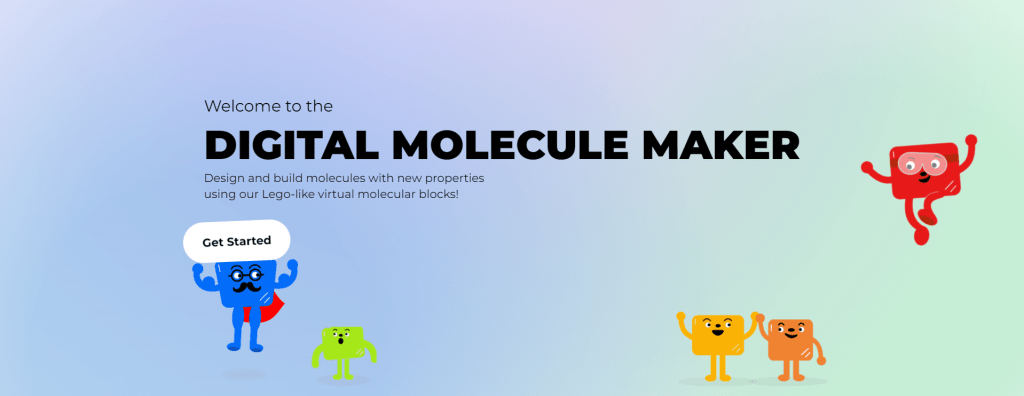
With technology this groundbreaking, education needs to come first.
Our external partners included pharmaceutical consultants, chemists, design thinking experts, teachers, researchers, LEGO designers, and faculty from universities across the world.
User Interface
We developed a website in Figma to show off the innovation of MMLi.
It will have a real-time activity dashboard, countdowns to completion, and continuous footage of the SMS!
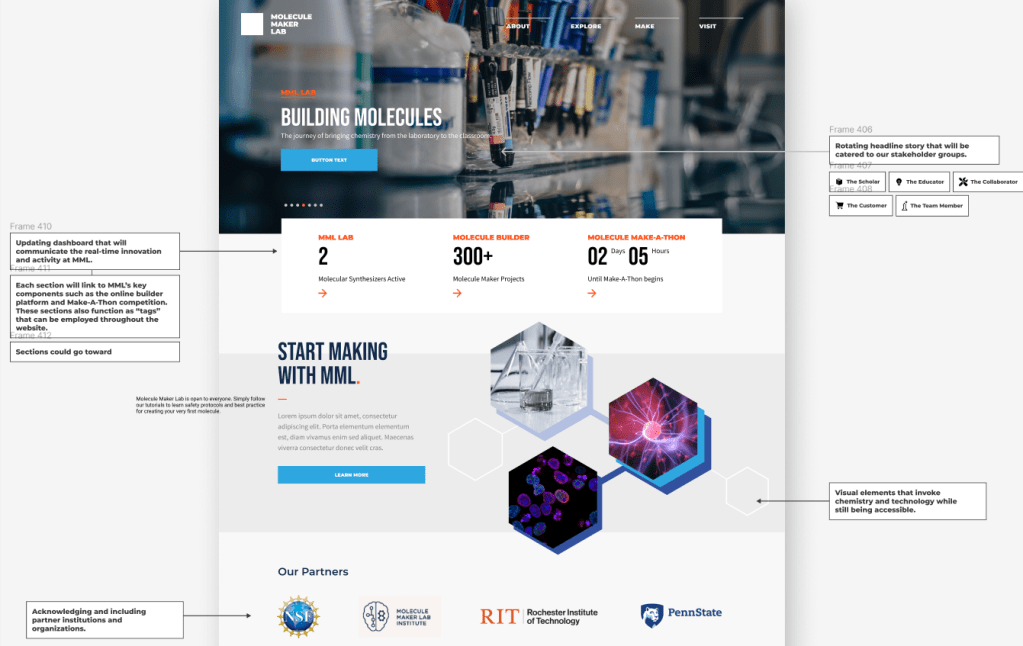
Iterating on our first website design
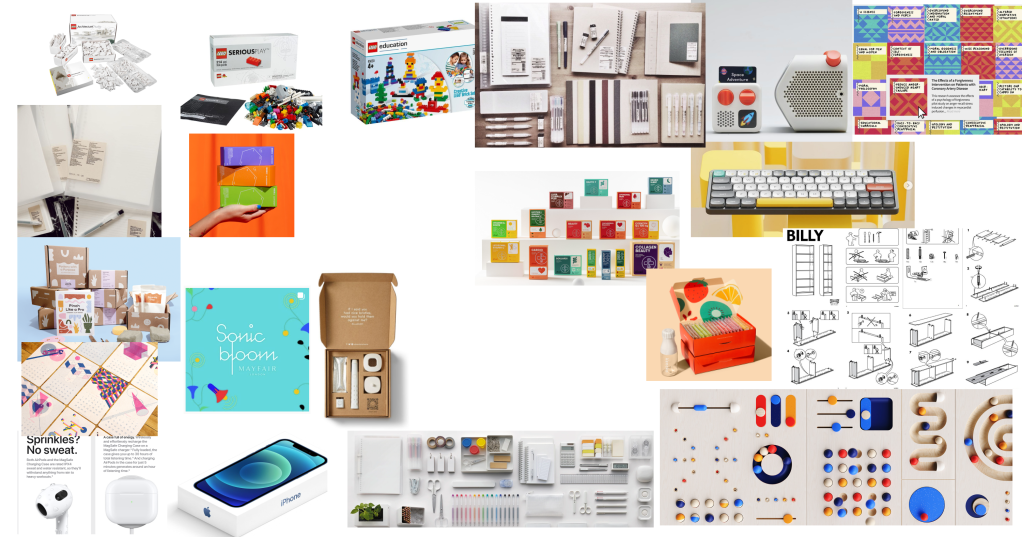
Below are the mood boards and artifacts that informed our design.
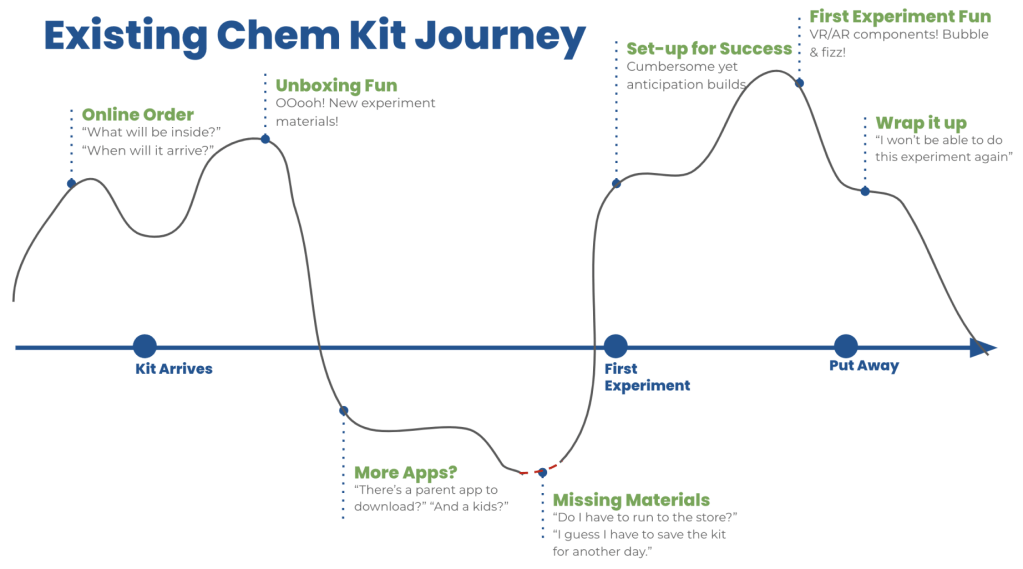

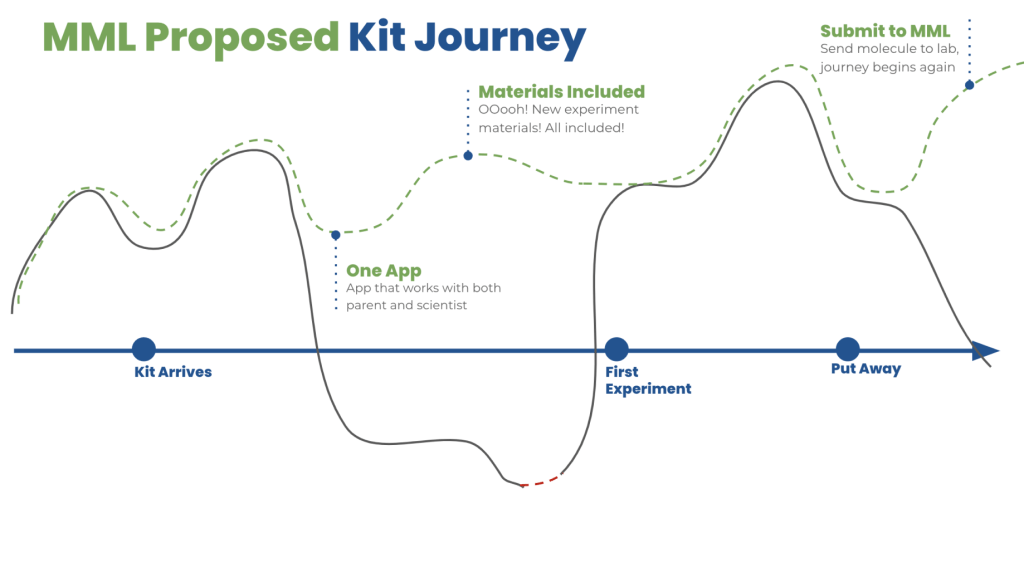
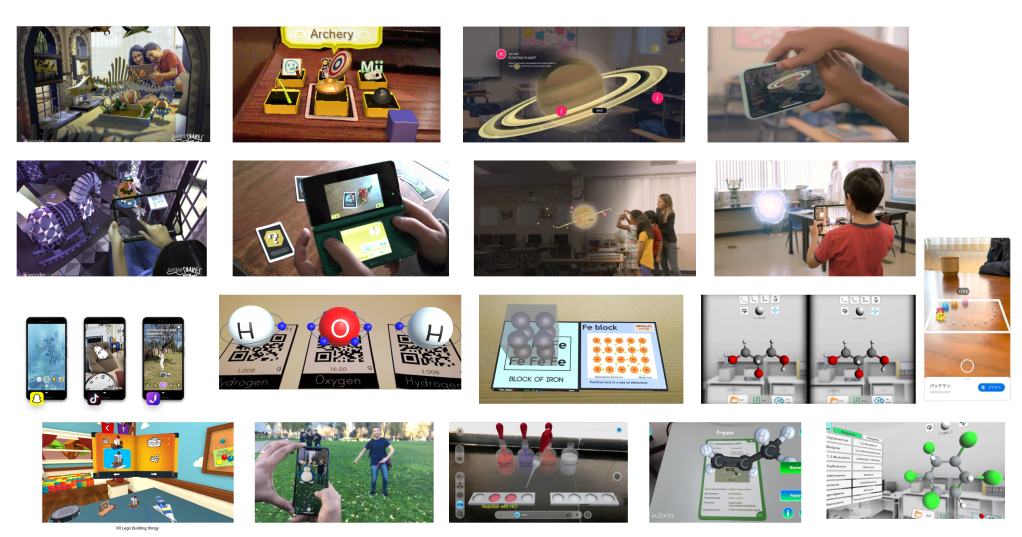
We wanted our science to be everywhere:
In the lab, at home, and on your phone!
The MMLi app brings your molecules to life. By scanning a your newly drawn molecule, you can see it in 3D and learn more about its properties!
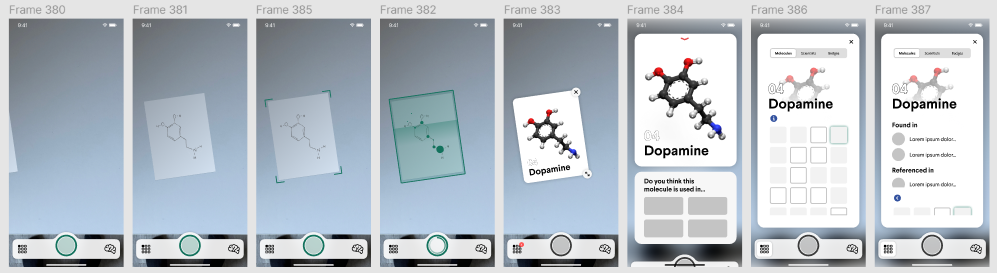
Potential Molecule Makers, or PMM’s, will always be welcome at MMLi. Users will receive personalized news and updates from our site. They can enter their interests in MMLi to get an individualized digital experience!
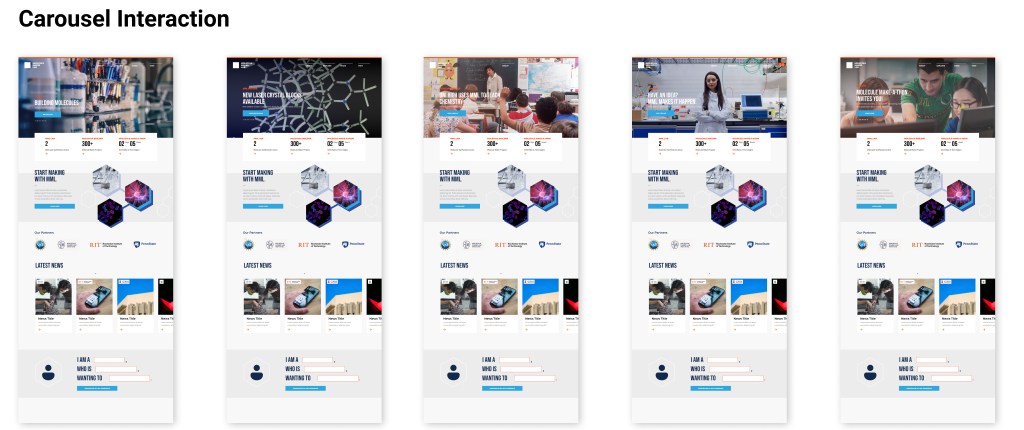
Whether you’re checking out your new molecule or you’re new in the world of chemistry, we have you covered! We have the latest in scientific updates.
These links will take users to scientific papers and experiments at MMLi. PMM’s can get to know the staff better and feel more comfortable making their own molecules!
Here’s the homepage of our Year 1
Website and Information Architecture!
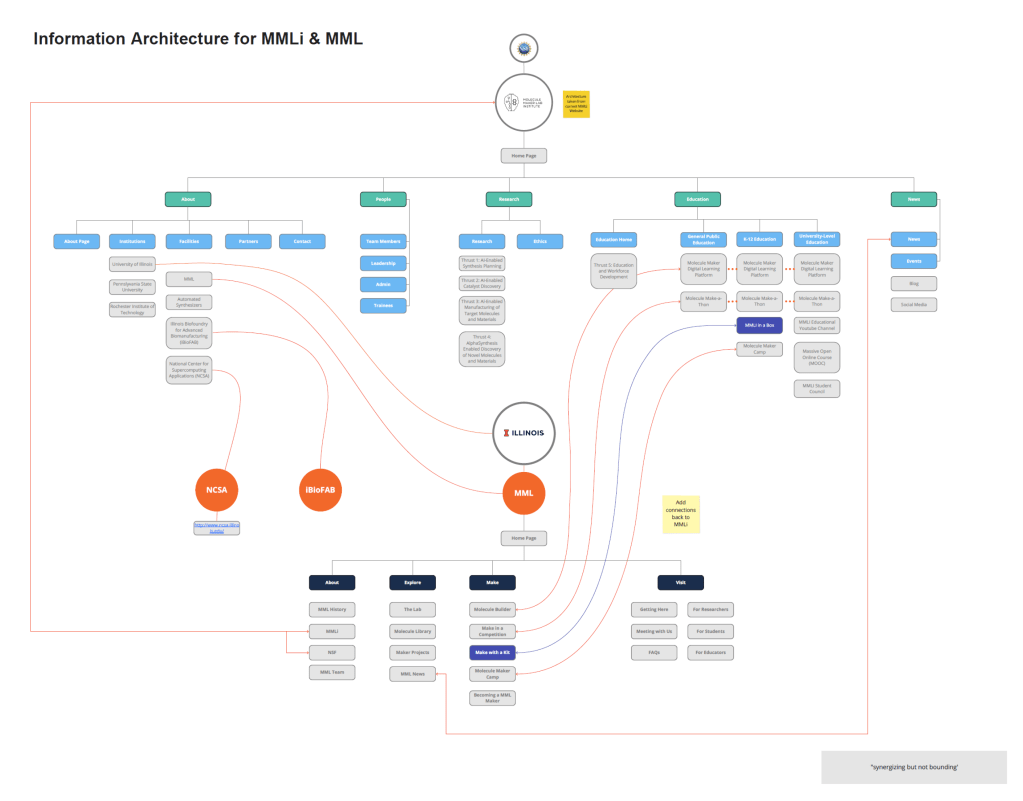

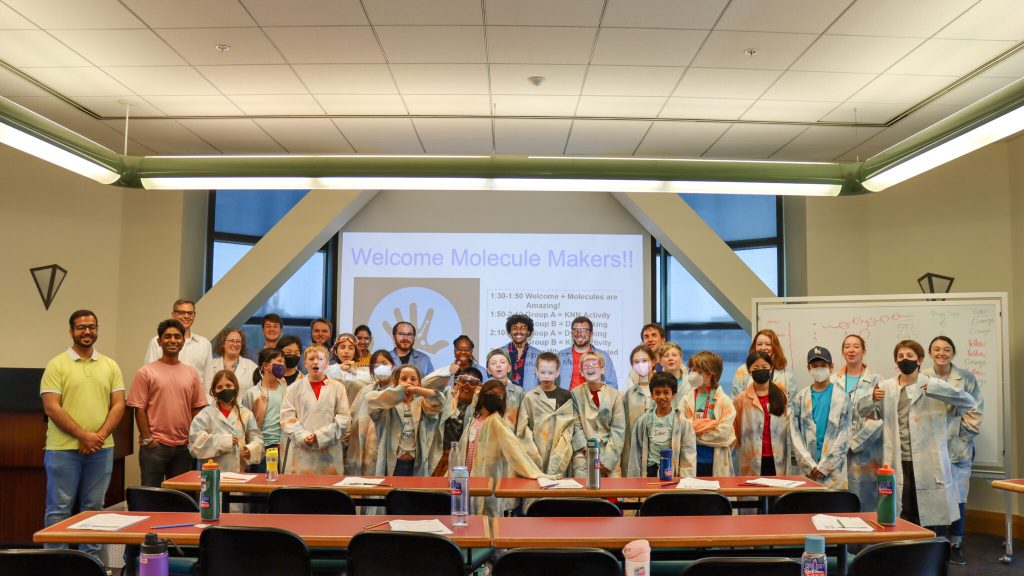
This all culminated in real classroom experiences.
It’s time to inspire the next generation of molecular makers!
Educational Technology
MMLi in a Box is a classroom experience meant to supplement the DMM. With different versions for different grade levels, MMLi works to make chemistry accessible to all ages.
Filled with experiments, supplies, instructions, and cool swag, it’s a modular laboratory!
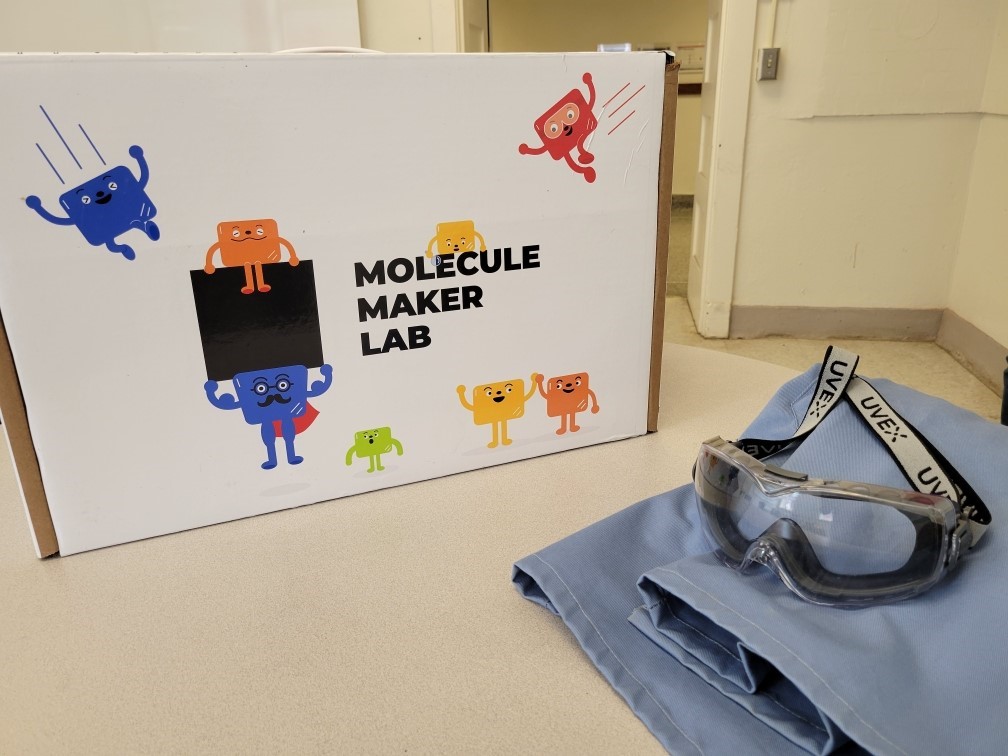
MMLi in a box with safety gear
We tested kids chemistry kits, interviewed teachers, and even did a demo run of MMLi in the classroom!
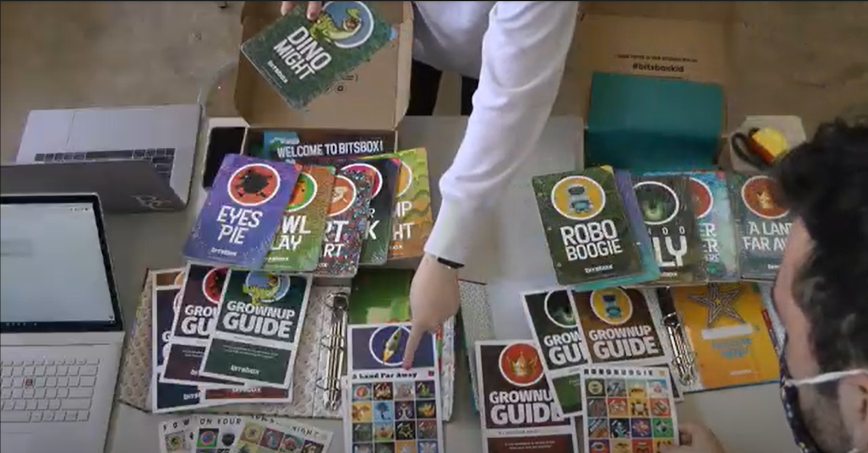
Our design team testing chemistry kits

Our expert chemists from Thrust IV
The professors we interviewed hoped for a world where chemistry isn’t guarded by impenetrable textbooks.
The secret to unlocking the potential in their students was to embody the learning!
With the help of our scientists, students can learn processes like a “KNN analysis”, and “coupling reaction.” They can even do a unique experiment where students predict the color of a molecule and then create it!
Coming soon, users can explore the MMLI Educational YouTube channel.
Introductory videos will be about MMLI’s research, advanced chemistry, and computer science topics.
 Alastair Merrett