
Goal:
Achieve cost savings, efficiency gains, and student success at Western Illinois University
Solution:
Use human-centered design to restructure COEHS (College of Education and Human Services)
Impact:
Submitted 4 democratically and efficaciously created proposals to the Dean of the College
Western Illinois University is facing financial challenges.
I used the design-thinking process to help COEHS save money and democratically restructure their department.
Western Illinois University (WIU), located in Macomb, Illinois, is a rural university that has seen substantial disinvestment from the state and surrounding cities over the past decade. After losing half their enrollment since 2006, WIU is looking to save money and optimize their organization.

Sherman Hall at WIU
My colleague (the Dean of Innovation at WIU) and I created a group of 14 campus representatives, 2 from each department, to go through a 10-week design sprint to redesign the college. The final product would be 4 possible reorganizations.
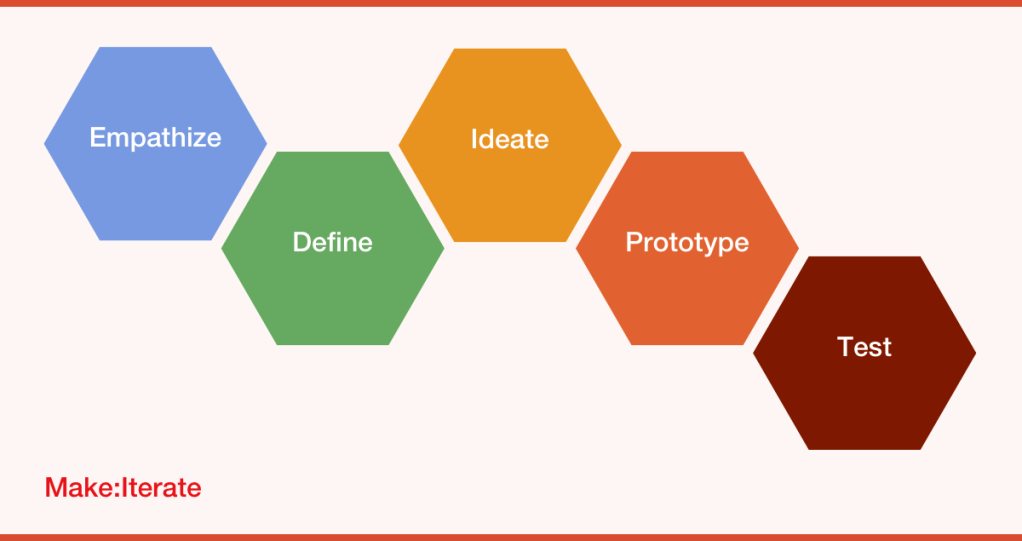
Stanford University’s 5-step Design Thinking process, one of our favorites.
We split our sprint into 5 meetings, each one teaching a new step in the design process.
These were virtual sessions so we also had informational sessions on Zoom and Mural.
Research
We began our design sprint by sharing the importance of user-centered practices in higher education. Flagship universities are seeing growth while regional universities, like WIU, are not.
We provided two ways to examine reorganization in higher education: research literature & case studies.
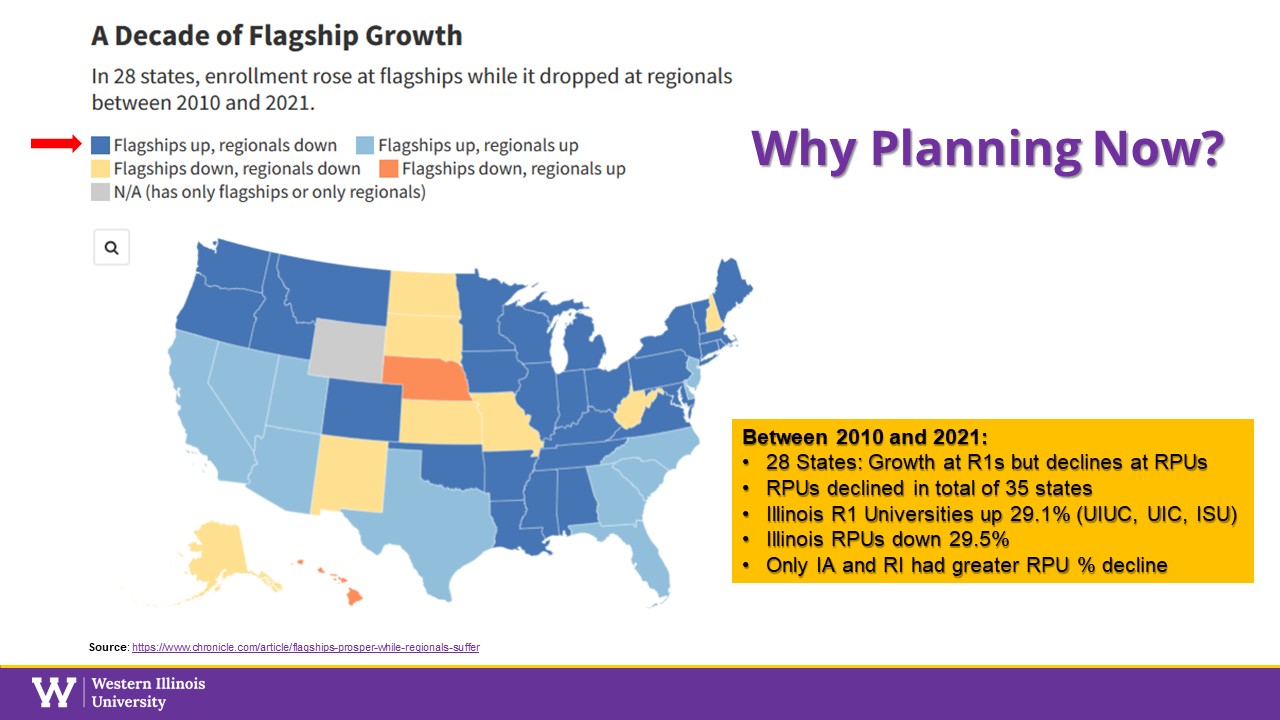
Nationwide college enrollment. (click to enlarge)
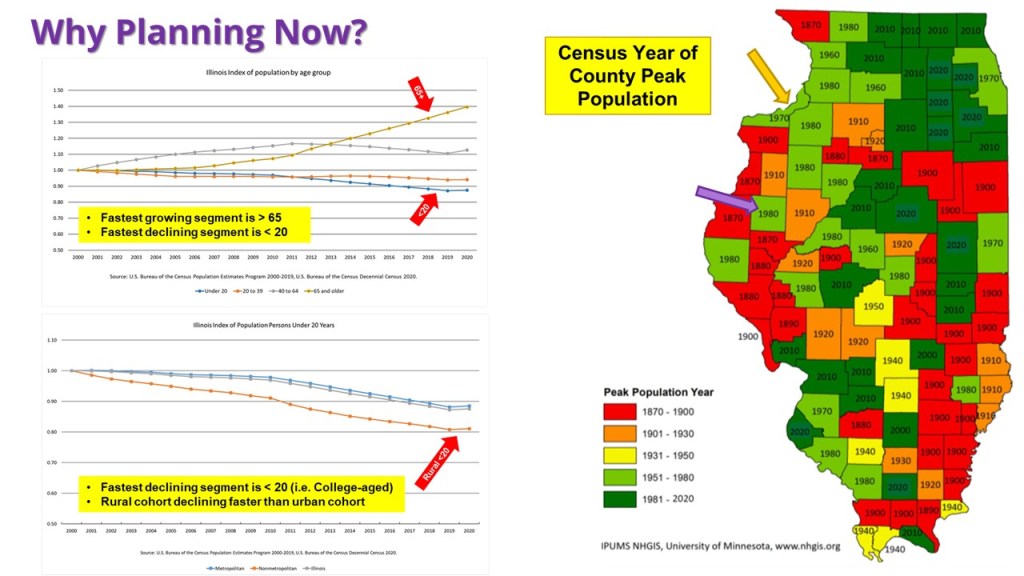
Population loss in rural Illinois. (click to enlarge)
Literature Review:
We provided diverse reviews from public administration, higher education, human resource management and others.
Case Studies:
The case studies detailed the ways that universities have reorganized to increase financial stability without sacrificing faculty and staff.
Click the button below to view the literature and studies.
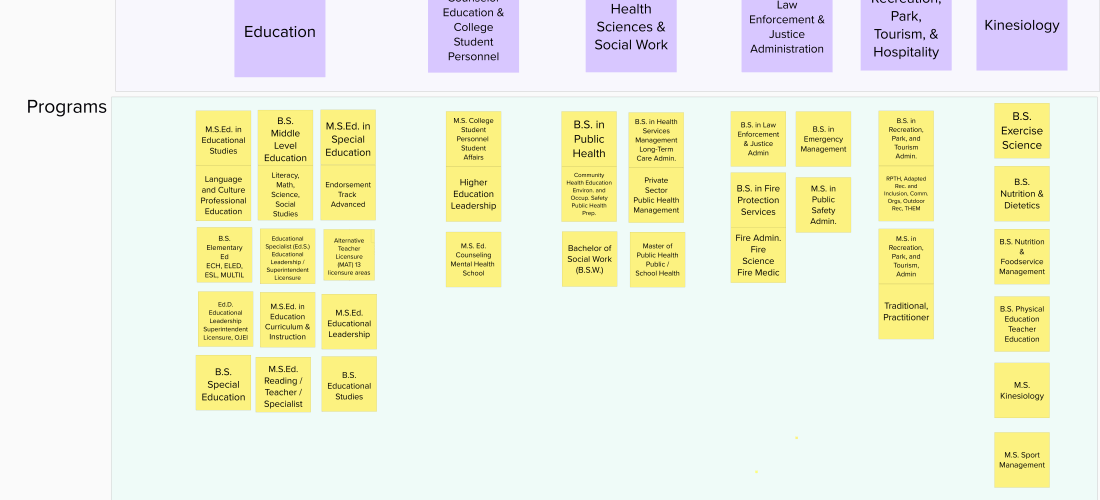
Below is the original college organization, each school is labeled in the second row in blue.
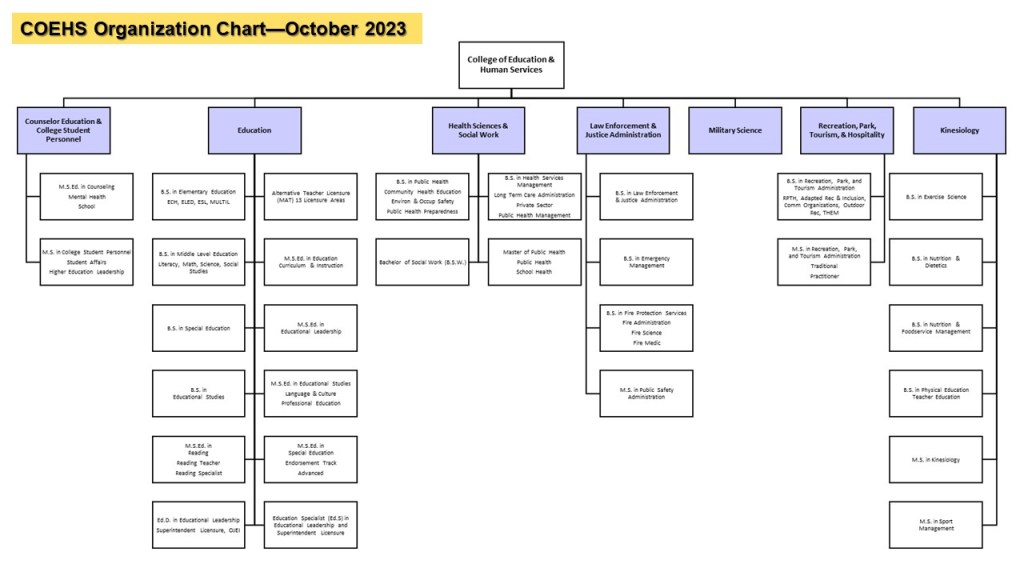
Our goal was to create 4 new arrangements of the schools.
HCD Education
Each week, we went through a new step in the human-centered design (HCD) process. Our Ideate meeting is where we created our new organizational charts.
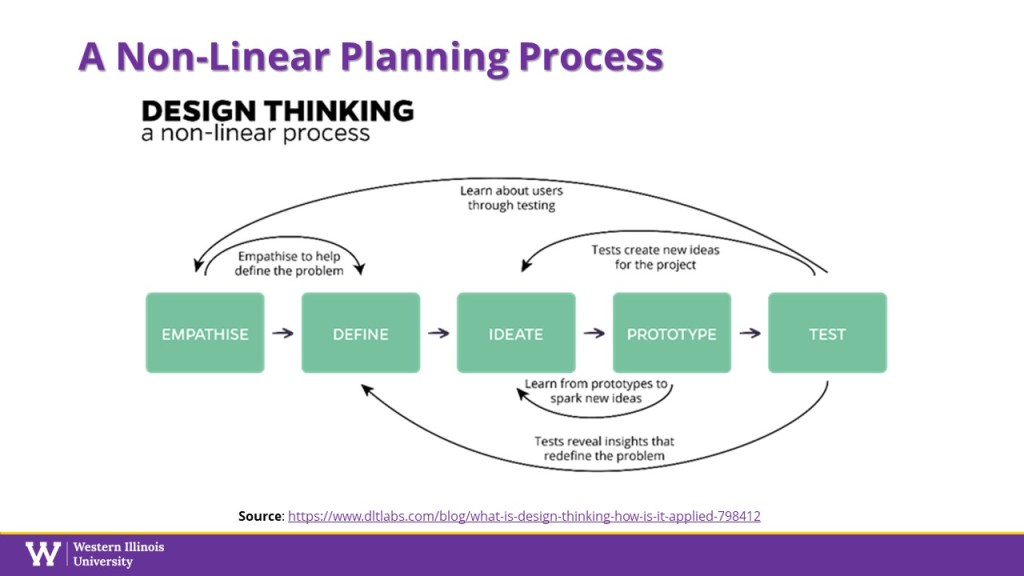
We showed many different versions of the HCD process to illustrate that it is not always straight-forward.
WIU Discussion
In addition to education, we also used this space to learn more about WIU. We conducted discussions and surveys about university life.

A word cloud of the meeting minutes from our Define meeting.
We sent out a survey to the entire college to gauge opinions before entering into the reorganizing activity.
Below are the responses to some of the more igniting questions. These elicited great responses!
Armed with data and education, we moved into our ideation stage on Mural.
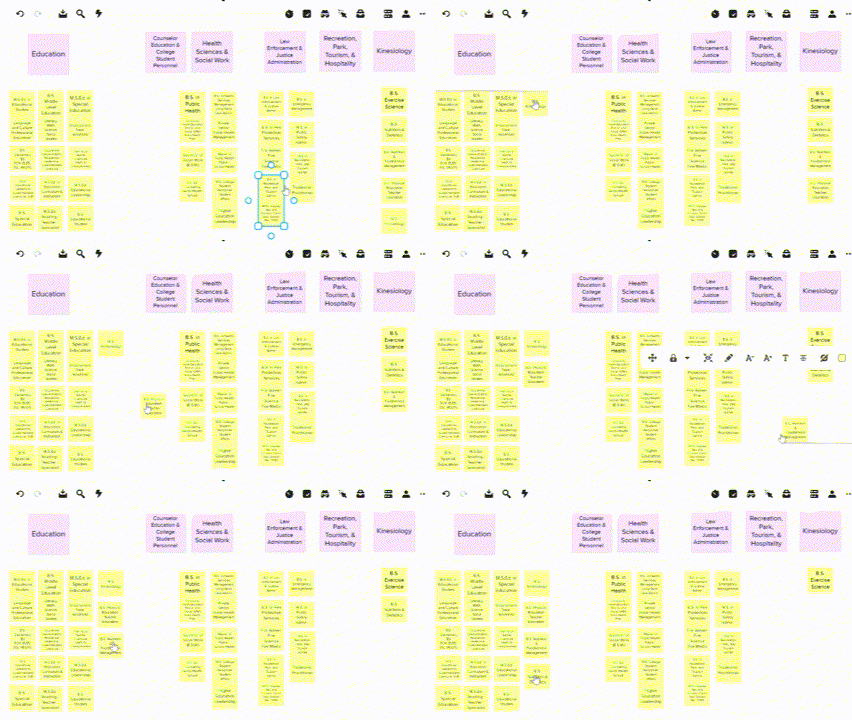
This is how a participant can reorganize the college.
Mural is a free collaborative whiteboard software. I created templates for each representative to edit how they please.
Some participants intuited the software and completed the activity within minutes. Others struggled to effectively use it, creating frustration.
This began to snowball into a heated discussion about departmental politics, fueled by the inability to voice their concerns through the software.
Making sure each representative effectively voiced their opinion was my #1 priority.
To combat this, we stopped the activity and said that we would come back next week with more education and try again. I also stayed after our meeting to be sure each participant said all that they needed.
Pivoting and Reassessing
To ensure that each representative felt included, we extended our meeting times and reconducted the ideation session in departmental pairs.
With more instruction and familiarity, Ideation 2.0 went very smoothly.

A screenshot from a COEHS meeting
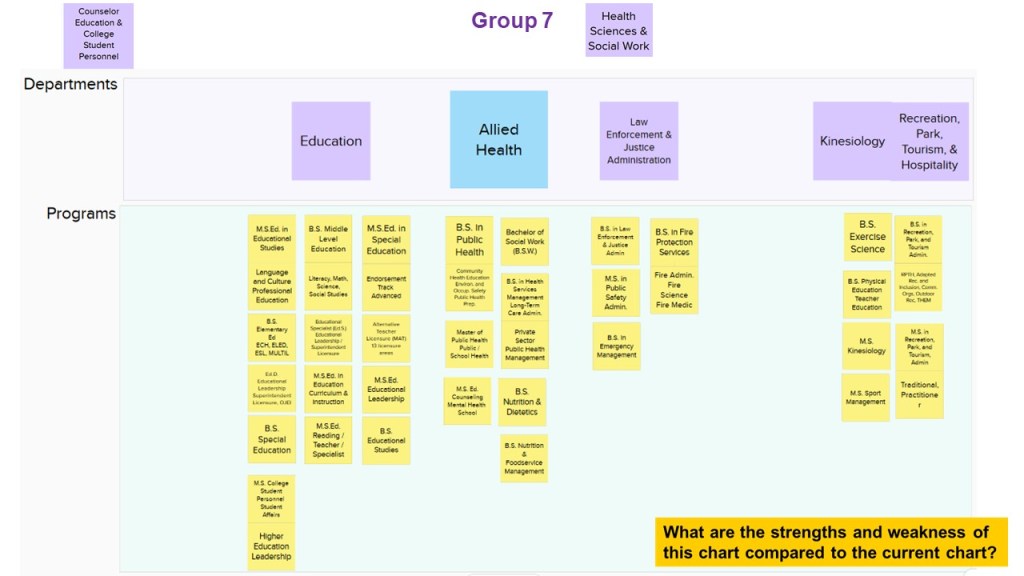
Below is a bit of the data analysis for the 14 organizations.
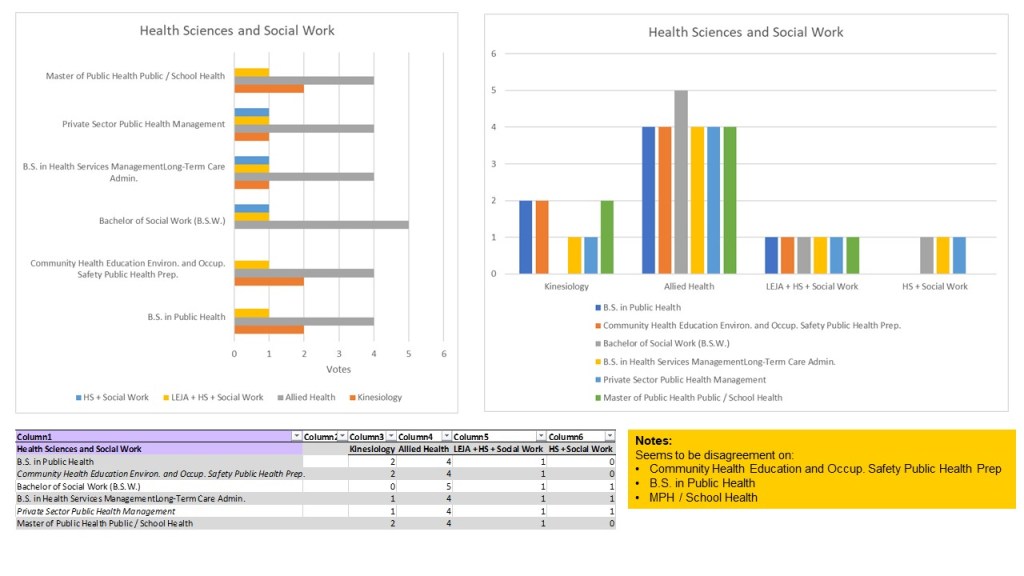
Data Analysis
I analyzed each organization by department location, degree placement, and program merger.
We discussed the obvious trends and blurry lines in our following meeting. We took notes of each strength and weakness.
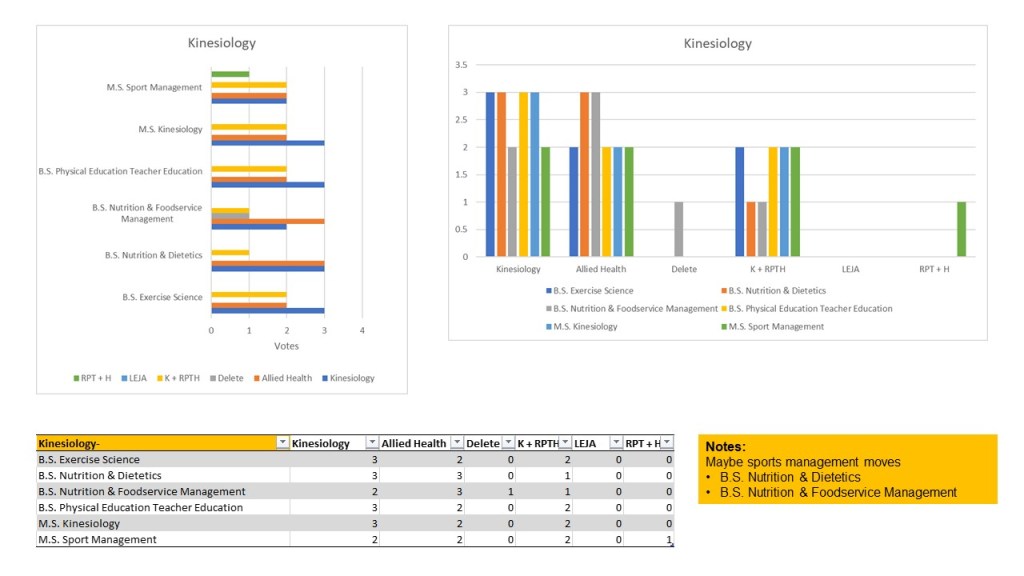
Above is the Kinesiology data. Click below to see the full data analysis.
We discussed strengths and weaknesses of each organization next.

Through this discussion, we decided on how we would split the organization: 1 with 6 units, 2 with 5 units, and 1 with 4 units. We then asked participants to rank each organization.
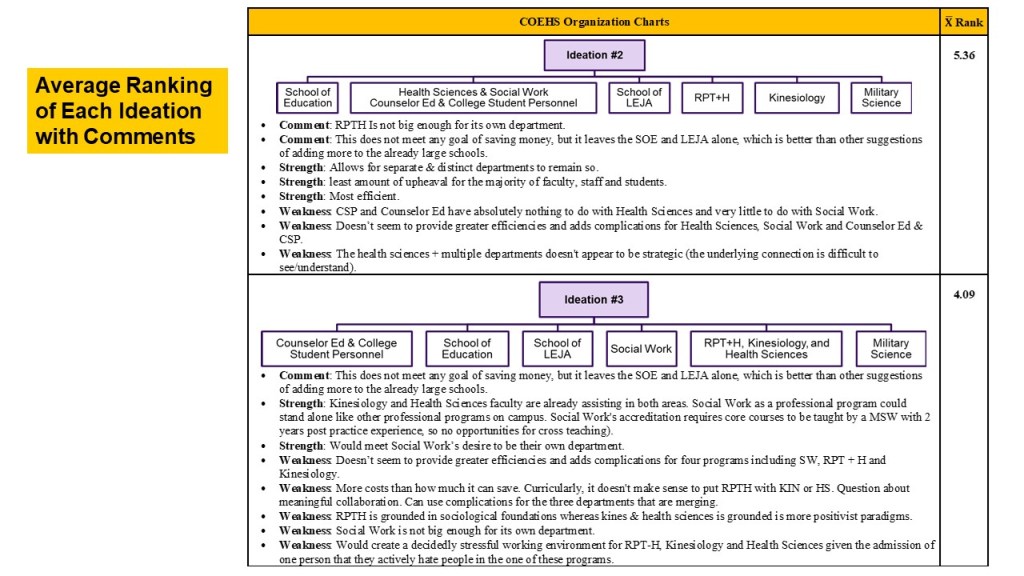
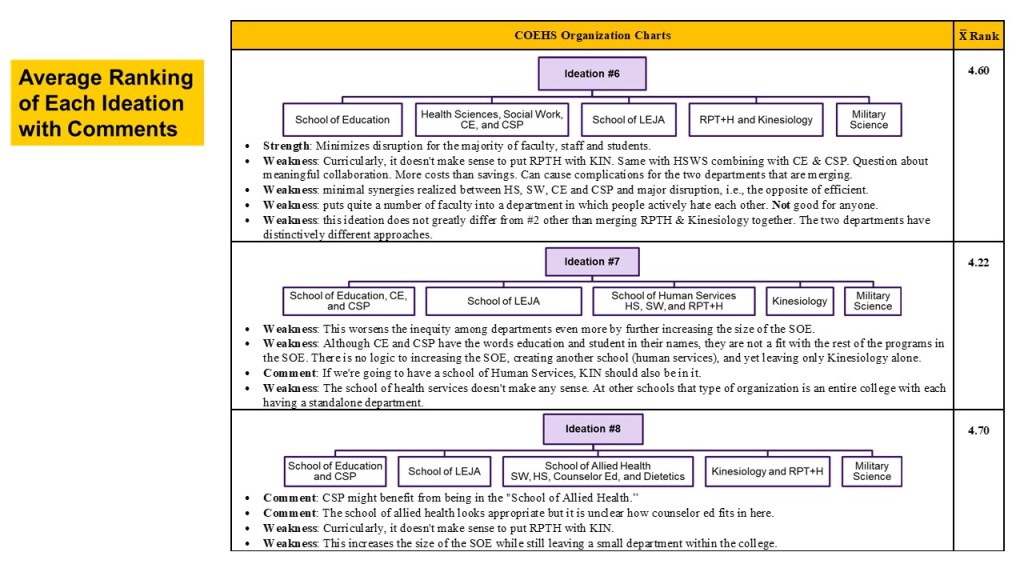

Final Results
The organizations the received the highest scores along with the best qualitative feedback were numbers 3, 9, 7, and 11.
After showing this data to our participants, they were pleased with the results and were happy with ending the committee.
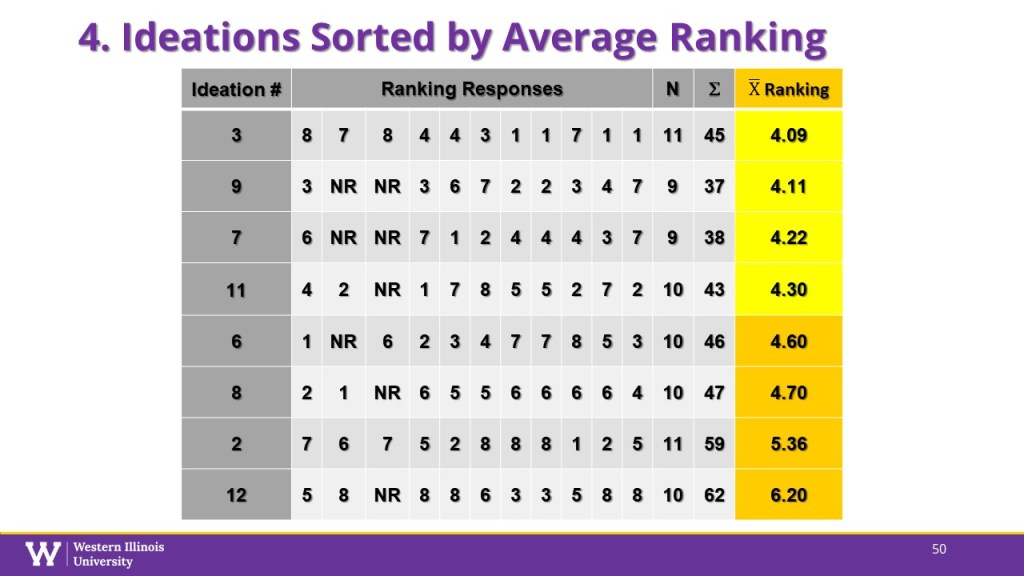
Each ideation is sorted by average ranking above.

Above are the top four ideations by rank.
Through the project, I learned the importance of proper education and pacing in facilitation. Regardless of background or experience, participants will always welcome more instruction so that they can most effectively participate.
Thank you to Professor Christopher for his help throughout this process!
 Alastair Merrett